I would put a 4.7v zener on the VPP feedback to bus pirate and ensure the resistors are scaled in a way the feedback should always be less than 4.3 volts. See for example the circuit of the DDR4 breakout.
The current device hardware is 32 pins, so 40 pin stuff is out of the question? Adding a 3rd IO expander would be able to do all 40 pins, plus one 8 bit port left over for controlling stuff on the board (VPP, VCC). That would free two pins to set the VPP/VCC via PWM margining.
32 bit is the sweet spot as the mcu is also 32 bits, so every operation is quite easy to do with standard c operations. adding more pins require more fiddeling.
Also the overhead is quite high to address the io expanders (a 32pin read write is 16 bytes on the SPI bus. 40 (or 48) pin would add 8 writes op the SPI bus. Speed will drop quite a bit.
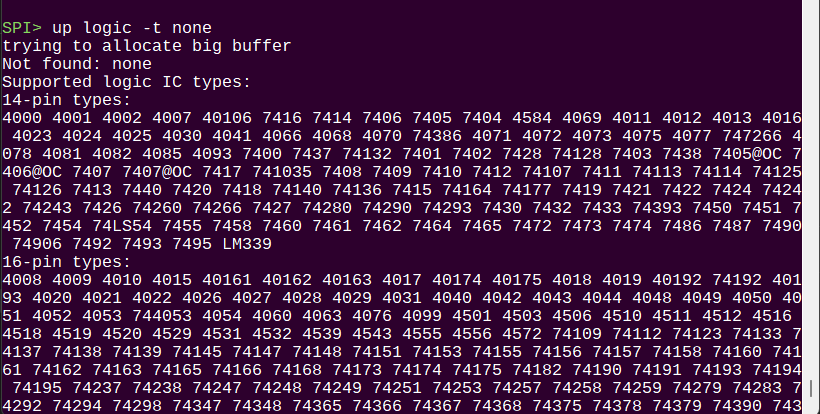
Since we have the names of the logic ICs in a nice struct we can print the available devices when the type is unknown. Not pretty yet, that needs a bot more work. Maybe tabs?
Since we have the names of the logic ICs in a nice struct we can print the available devices when the type is unknown. Not pretty yet, that needs a bot more work. Maybe tabs?
Maybe split them up by CMOS vs TTL first, then group them by function (logic gate, counter etc.) similar to the category on this list? This may be more useful than grouping by pin count only?
Thx @smdprutser & @ian Being able to buy a handful of different chips from AliExpress and learn electronics and hardware hacking at low cost with that programmer sounds like a great idea to me. I use the aux cables in parallel a lot in the BPV6 trainings, we’re hacking with commands, and at the same time we watch on the logic analyzer what that command is doing underneath. It’s super educational.
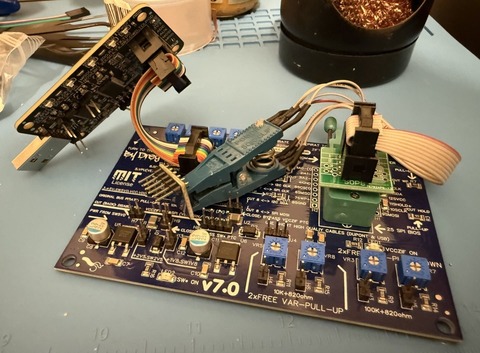
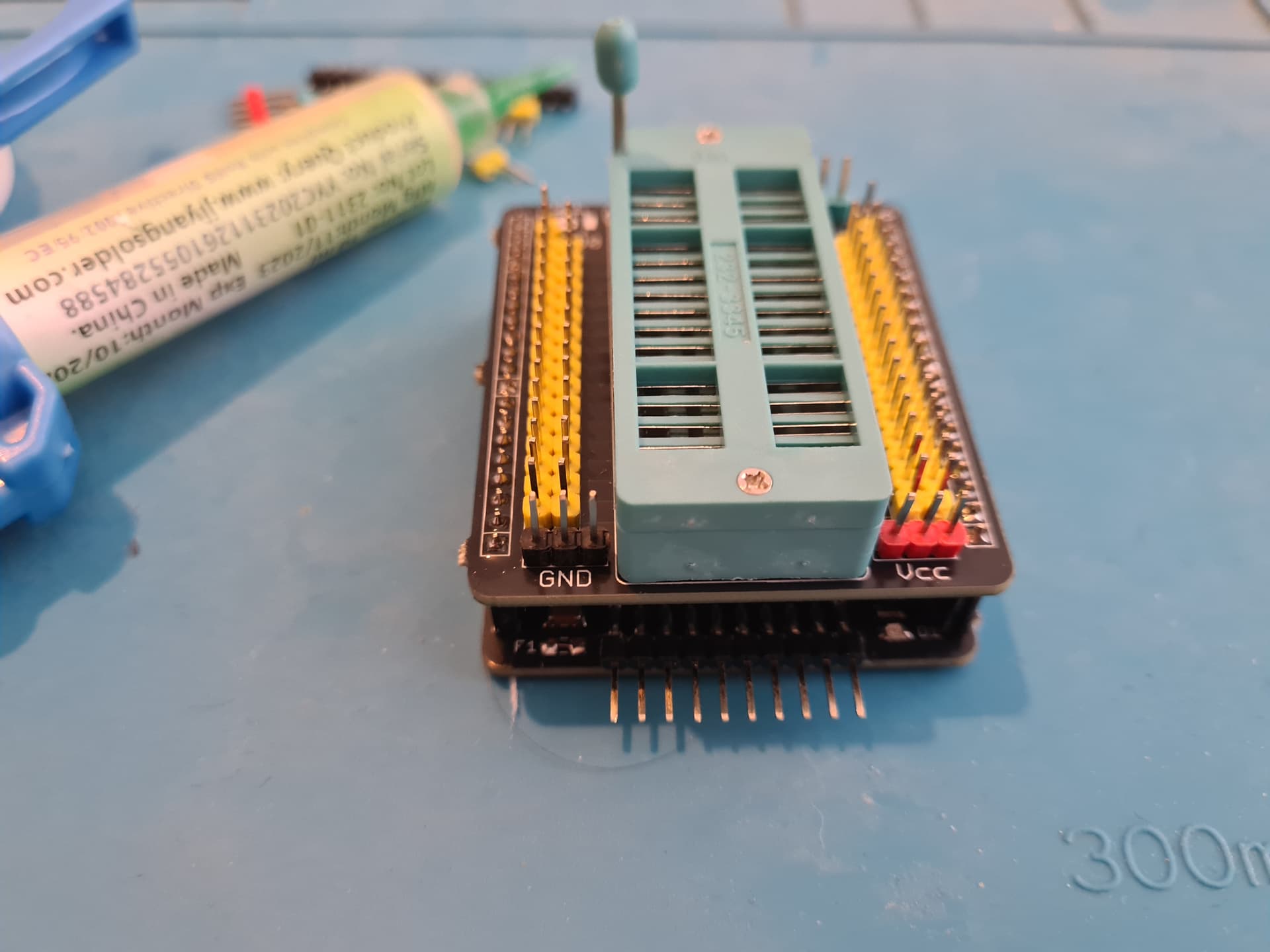
Also, since it has so many free physical slots, I can make auxiliary boards that sit on top of the ZIF for lots of things. I love the UP idea.
Thanks @dreg ! we are expecting to get the ‘almost’ final hardware next week and move from there.
feel free to share your ideas for adapter boards. ‘UP’ can provide 32 (flexible) IO’s with flexible Vio (iirc 1.8v upto 5v) and multiple (other) supplyvoltages.
One of the most useful things about this kind of ZIF-boards is that you can also make an adapter with a custom TH+IDCx-board (for polarity), and then use a Pomona-style clip or some custom pogo-thing-setup to probe external PCBs and do things there, both for hardware hacking and for my own PCBs.
 But still significant difference.